
The early days of online shopping in Southeast Asia were a far cry from the seamless experience we enjoy today. Back then, purchasing an item involved direct communication with the seller through social media handles or their personal website.
You’d place your order and then go to the bank to pay them. The seller would then manually handle inventory, packaging, and shipping—a time-consuming process for both parties.
But within a decade, everything changed. With their swift logistics processes, e-commerce platforms like Shopee, Lazada, and Tokopedia emerged and revolutionized how small sellers and micro-merchants do business online in Southeast Asia.
Merchants who used to rely on Chinese imports are now even considering diversifying their sourcing channels to include more Southeast Asian countries.
Unfortunately, delivery delays, slow speeds, poor customer service, damaged packages, and poor tracking functionalities have recently impacted consumers’ perceptions of e-commerce in Southeast Asia. For instance, a recent e-commerce report from McKinsey shows a surge in these complaints, creating an opportunity gap for willing e-commerce platform players to leverage.
In this guide, we’ll explore Southeast Asia’s e-commerce logistics market size, the top players’ logistics approaches, and the region’s e-commerce logistic challenges.
Southeast Asia’s E-commerce Logistics Market Size
The e-commerce logistics market in Southeast Asia is projected to expand by USD 85.12 billion between 2023 and 2028, with a compound annual growth rate (CAGR) of 21.25%. This remarkable growth is fueled by several key factors, including the growing popularity of social commerce, increased internet penetration, and escalating consumer demand for fast and efficient delivery services.
A notable trend is the emergence of supermarket mini-distribution centres, which retailers and e-commerce companies are using to expedite order fulfilment and enhance delivery speed.
However, a major challenge is the shortage of skilled professionals in logistics, supply chain management, and emerging technologies. Addressing this skills gap is crucial for leveraging advanced solutions and ensuring smooth operations in this rapidly growing market.
E-commerce Players Approach to Logistics in Southeast Asia
Shopee, Lazada and Tokopedia have successfully tamed the logistics gaps and are currently the biggest e-commerce platforms in Southeast Asia. Shopee estimates over 500 million monthly traffic visits, Lazada sees 140 million visits, and Tokopedia gets 110 million visits.
TikTok Shop also competes with these three as there are over 100 million active TikTok users in Southeast Asia alone. But let’s take a brief look at their logistics approaches:
Shopee
Shopee offers sellers a multi-pronged approach to logistics, balancing convenience, affordability, and flexibility. Shopee Supported Logistics (SSL) is one integrated service they offer, partnering with several carriers.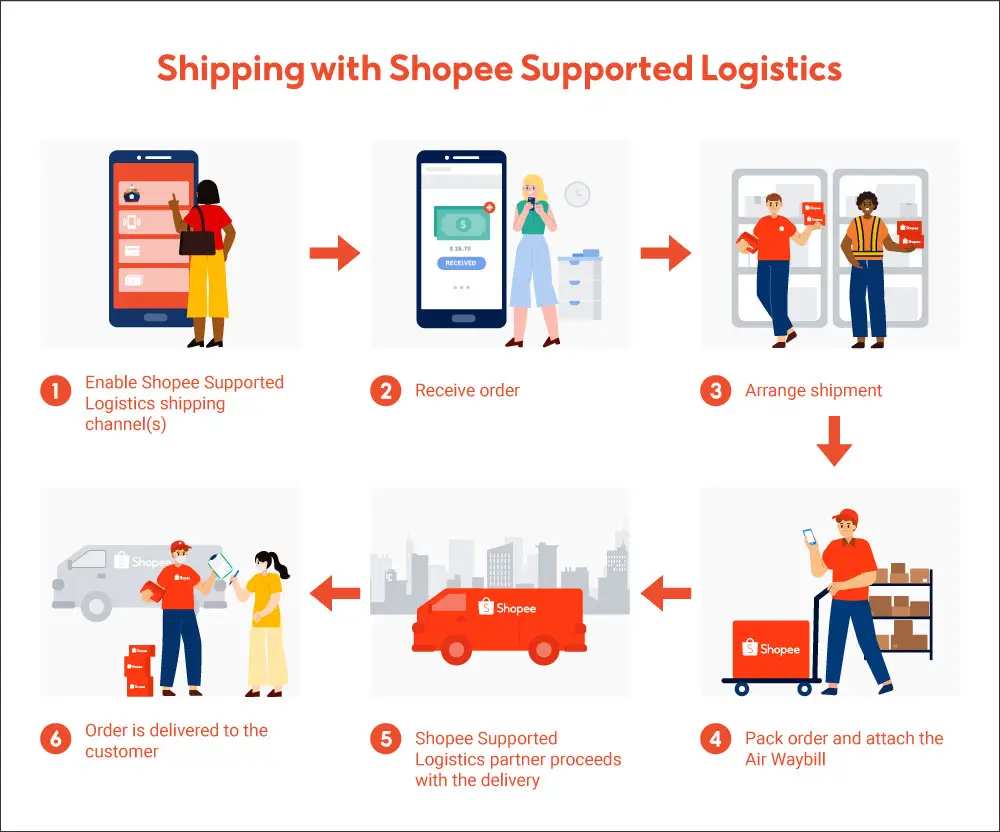
Shopee provides sellers with non-integrated logistics options of familiar carriers like Poslaju, J&T Express, etc., but without Shopee subsidies. Sellers can use subsidized shipping fees, easy booking through the Seller Centre, and real-time tracking. Various standard and integrated shipping methods are also available, catering to different speed/cost needs.
Overall, Shopee prioritizes affordability, convenience, and customer satisfaction. The subsidized SSL makes it attractive, especially for smaller sellers and low-margin items. They incentivize fast shipping to keep consumers happy. The SSL’s Seller Centre integration also streamlines the logistics process, which is crucial for high-volume shops.
Lazada
Lazada’s approach to logistics is characterized by its emphasis on technology-driven solutions, data-driven decision-making, and a commitment to sustainability. They boast a large, intelligent, and integrated logistics and supply chain network for e-commerce in Southeast Asia. This network includes fulfillment centres, sortation centres, and pick-up and delivery hubs strategically located across the region. 
Lazada invests heavily in technology to automate logistics processes and provide integrated fulfilment and supply chain management services. Their in-house logistics platform, Apollo, streamlines the entire logistics journey, from order fulfilment to last-mile delivery.
They offer sellers various fulfilment and logistics services, helping them manage their inventory, streamline their operations, and expand their reach. This includes services like Lazada Global Fulfillment (LGF) and cross-border logistics solutions.
Lazada also uses data analytics to optimize inventory management, route planning, and resource allocation. This has, so far, ensured efficient operations, reduced costs, and improved delivery times.
They prioritize customer satisfaction by offering fast, reliable deliveries, convenient pick-up options, and easy returns. By exploring the use of electric vehicles and optimizing delivery routes to reduce emissions, Lazada is keen to implement eco-friendly packaging solutions.
Tokopedia
Tokopedia’s approach to logistics in Indonesia focuses on democratizing business experience, particularly for smaller merchants. They’ve recognized these merchants’ challenges in managing logistics and fulfilment, especially in a geographically diverse country like Indonesia.

Tokopedia collaborates with various logistics partners to offer a wide range of delivery options, including same-day delivery. This allows merchants to choose the most suitable and cost-effective option for their products and customers.
For instance, TokoCabang (Dilayani Tokopedia) is a fulfilment service that allows merchants to store their products in a network of fulfillment centres strategically located across Indonesia. This reduces the storage and inventory management burden for merchants and enables faster customer delivery.
Leveraging its partnership with Gojek, Tokopedia uses the ride-hailing platform’s extensive network of driver-partners to facilitate last-mile deliveries.
Moreover, Tokopedia aims to make logistics accessible and affordable for all merchants, regardless of their size. They offer competitive pricing and subsidies to reduce shipping costs, especially for smaller sellers.
Tokopedia also uses top-tier technology to optimize its logistics operations, from inventory management to route planning and tracking. This enables them to provide real-time visibility and transparency to both merchants and customers.
TikTok Shop
TikTok Shop primarily collaborates with established logistics companies to handle product transportation and delivery. The platform itself serves as a bridge between sellers and logistics providers, facilitating the coordination and management of shipments.
The sellers provide essential details such as the origin and destination of the goods, contact information, and other relevant information. TikTok then arranges personnel to pick up goods from the seller’s location and works with logistics partners to handle transportation and distribution.
For international orders, TikTok collaborates with logistics companies specializing in cross-border shipping to ensure smooth customs clearance and delivery to overseas customers. Some of these partners include Ninja Van and Best Express, which are to handle the final delivery to the customer’s doorstep.
Notable Logistical Challenges in Southeast Asia
The rapid growth of e-commerce in Southeast Asia has spotlighted the region’s logistical challenges. The potential for growth is immense, but several hurdles hinder the smooth and efficient flow of goods:
#1. Fragmented infrastructure
Southeast Asia comprises diverse landscapes and varying levels of infrastructure development. Some urban centers boast modern facilities, but rural and remote areas often lack adequate road networks, ports, and airports. This fragmentation complicates transportation and last-mile delivery, leading to delays and increased costs.
#2. Regulatory complexities
Each country in the region has its own set of regulations and customs procedures, creating a complex environment for cross-border trade and logistics operations. Navigating these diverse regulations can be time-consuming and costly, impacting delivery timelines and overall efficiency.
#3. Last-mile delivery challenges
The “last mile” – the final leg of delivery to the customer’s doorstep – is often the most challenging and expensive part of the logistics process. In Southeast Asia, factors like traffic congestion, inadequate addressing systems, and limited delivery infrastructure in rural areas make last-mile delivery particularly complex.
#4. Technological disparities
Some logistics providers have adopted advanced technologies like warehouse automation and real-time tracking, but many smaller players still rely on manual processes and outdated systems. This lack of technological adoption can lead to inefficiencies and limit the sector’s overall growth potential.
#5. Rising customer expectations
As e-commerce continues to grow, customer expectations for fast, reliable, and affordable deliveries are also rising. Logistics providers need to adapt to these changing demands by investing in technology, infrastructure, and customer service to meet the market’s evolving needs.
Shopee and Lazada’s Undergoing Case
Indonesia’s Business Competition Supervisory Commission (KPPU) announced on May 27, 2024 that it was investigating the local units of Shopee and Lazada, two major e-commerce platforms, for potential violations of anti-competition rules. The investigation specifically targets PT Shopee International Indonesia and PT Ecart Webportal Indonesia, the respective domestic units of Shopee and Lazada.
The KPPU has found early evidence suggesting that Lazada may have engaged in discriminatory actions that could potentially hinder competition and harm customers. The specifics of these actions weren’t disclosed, but the agency stated that both companies are under scrutiny for similar violations.
If found guilty, Lazada could face substantial fines, up to 50% of its net profit or 10% of its total sales during the infringement period. The investigation into Shopee’s local unit is also underway and yet to warrant a penalty, with the KPPU stating that the alleged violations by both companies are similar in nature.
Cases like this remind of the growing regulatory scrutiny faced by major e-commerce platforms in Southeast Asia as governments seek to ensure fair competition and protect consumer interests.
Wrapping Up
It is now clear that Southeast Asia is on the move due to increasing digital adoption. Big names like Shopee, Lazada, Tokopedia, and Tiktok aren’t just competing on products; they’re vying for who can get those products to your doorstep in the fastest and most hassle-free way.
Shopee has its own delivery network to ensure that things get to you quickly and cheaply. Lazada has built a huge, high-tech system that tracks your package every step of the way. Tokopedia is helping small businesses with its fulfilment centres and partnerships with delivery companies. TikTok Shop also partners with multiple reliable partners.
Sure, Southeast Asia has challenges, like rough terrain and different rules in each country. But these companies are up for it. They use tech, data, and teamwork to make things run smoothly. It’s all about ensuring consumers get what they ordered when they want it without a hitch.
With more investment in tech and greener practices, we’re bound to see even more impressive ways of delivery. This is great news for big companies, small businesses, and shoppers alike. The easier it is to deliver stuff, the more the region’s economy will thrive.