

Many attribute the impressive growth of e-commerce in Southeast Asia to the pandemic, as many turned to their phones and other devices for easy shopping and food delivery during the lockdowns and social distancing measures.
However, when lockdowns lifted and life returned to a sense of normalcy, many consumers opted to keep shopping online. Over 60% of Southeast Asian consumers shopped online or through apps more frequently after the pandemic. Of course, e-commerce was not invented during the pandemic, but the shift in consumer behavior was enough to double its sales from 2020 to 2024.
E-commerce represents convenience to a growing population who are fast adopting to life online. Among urban internet users, 94% have adopted e-commerce platforms, followed by food delivery, transport, online groceries, and travel.
This shift toward digital shopping and ballooning internet penetration rates, along with a GDP of over 4 trillion US dollars and 600 million potential online shoppers, make the Southeast Asia region a perfect market for e-commerce sellers.
How popular is online shopping in Southeast Asia?
Extremely popular–and the numbers don’t lie.
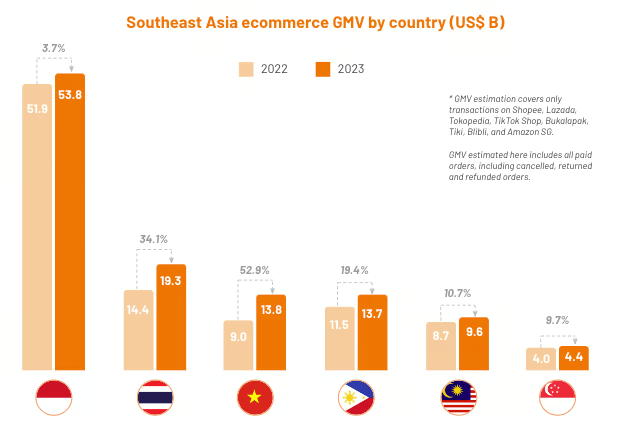
The GMV of the leading e-commerce platforms in Southeast Asia topped $114.6 billion in 2023–a 15% increase from 2022. E-commerce in the region is expected to hit $330 billion by 2025 and has been reported as one of the fastest-growing regions in the last five years. The number of e-commerce consumers will only grow as more people in the region gain access to smartphones and the internet.
The e-commerce market currently dominate by electronics, which captured 34% of sales, followed by beauty, personal care, and health, accounting for 16%, and then fashion, which is around 15% of sales.
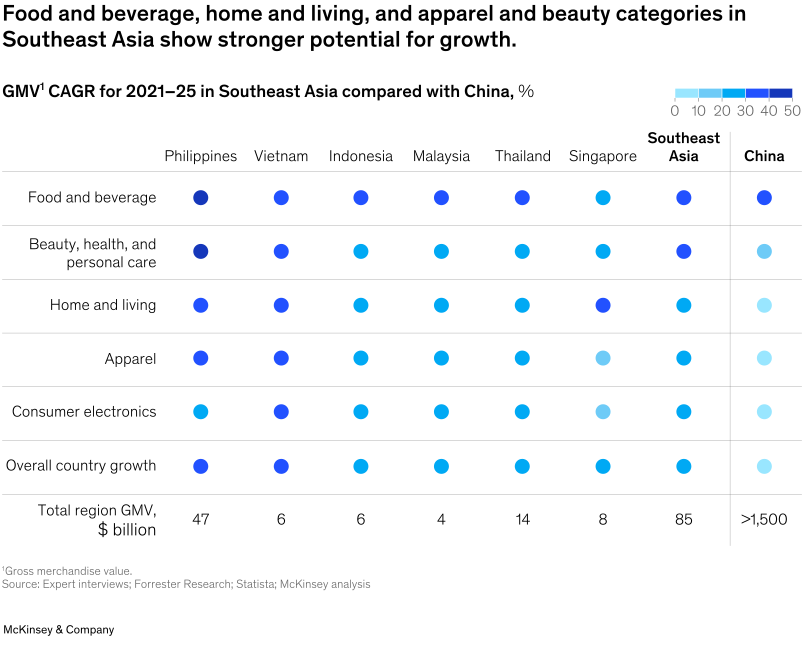
The market is fueled primarily by consumer-to-consumer transactions, but as e-commerce in the region evolves, we will likely see more B2C sales. An increase in B2C sales means a more sophisticated supply chain, a potential challenge for suppliers who historically relied on imported goods from China. Some studies suggest this will lead to economic opportunities for logistic providers in Southeast Asia.
What are the largest online retailers in Southeast Asia?
There are multiple online retailers in Asia, each with its own strengths and weaknesses.
The top online retailers in Southeast Asia are:
Shopee
Shopee has grown to be an e-commerce powerhouse in Southeast Asia and was found to be the top e-commerce platform among the six countries studied. With over 48% market share, many consider it the Amazon of Southeast Asia.
Shopee is ranked the number one e-commerce platform in the region for many reasons and is the most popular e-commerce platform in the region.
Lazada
In most countries, Lazada follows closely behind Shopee in terms of popularity and usage rates. Lazada is also investing heavily in AI to increase sales by providing personalized shopping recommendations, as well as upping funds to its logistics infrastructure. See more in-depth coverage of Lazada’s growth here.
TikTok Shop
While still a relative newcomer to the e-commerce space in Southeast Asia, TikTok Shop has not wasted time taking over market share. It differentiates itself through its integration with social media and omni-channel marketing which makes it easy for sellers to reach their target audience.
TikTok Shop recently merged with Tokopedia, the Indonesian e-commerce company, and has become the second-largest e-commerce platform in Southeast Asia. In 2023, TikTok Shop increased its annual GMV by four times, bringing it to $16.3 billion U.S. dollars.
Of course, each country has a different preference for e-commerce apps. For example, consumers in Indonesia are more likely to shop on Tokopedia, while those in Vietnam might turn to Tiki.
All of these countries ranked Shopee as their number one e-commerce platform. Singapore was the only country that ranked Amazon as a top e-commerce platform.
What is the Amazon equivalent in Southeast Asia?
When asked to picture the biggest e-commerce retailer in the world, many would likely think of Amazon especially when considering the U.S. or European market.
However, while Amazon does have a presence in Asia, it is far from being the number one online retailer in the region.
Many Southeast Asians prefer other, more local, e-commerce marketplaces. Amazon does not have a dedicated website in any Southeastern Asian country (except for Singapore). Hence, Southeast Asia only contributed 1% of traffic to Amazon.com. While this seems like a minuscule portion, 1% of traffic equals 25 million visits.
What is the future outlook for e-commerce in Southeast Asia?
It is project that e-commerce will reach a market value of $211 billion US dollars by 2025. Most studies see even more positive growth for e-commerce in Southeast Asia. Despite impressive growth, there’s still room for further expansion.
E-commerce markets of the various countries in Southeast Asia will expand at their own pace. For example, countries like Vietnam and Thailand have more room to grow than Indonesia, whose e-commerce market is already well into maturity. Singapore is the leader in Southeast Asian commerce, with a market size of $9 million US dollars.
Compared to the U.S., whose e-commerce penetration rate in 2024 was 84.53%. China’s penetration rate is around 47%. Southeast Asia’s average e-commerce penetration rate is a fraction of these countries’ and sits at around 20%. Indonesia and Singapore lead the pack with a 30% penetration rate–double the rate of Vietnam and Thailand.
Looking forward, Vietnam and Thailand are the countries to watch. Both countries were highlighted in Momentum Works’ study as the fastest-growing e-commerce markets and increased their GMVs by 52.9% and 34.1%, respectively.
What are the new trends in Southeast Asian e-commerce?
The growth trajectory of e-commerce in Southeast Asia is extremely positive. E-commerce will continue to evolve with new trends like AI integration and omni-channel e-commerce. AI has already boosted sales by helping businesses enhance their customer service, with marketing, and consumer information tracking.
The trend towards social selling, a type of omni-channel selling, is just beginning to take off in Southeast Asia. The proliferation of TikTok Shop’s method of combining social media with shopping has spread. It will continue to spread–to other e-commerce platforms like Shopee and Lazada. Live selling, where sellers market products to live audiences and closely linked to TikTok Shop, will likely take hold on other platforms.