

Source: Free Malaysia Today
Temu has managed to become a household name across the globe in just a few, short years. The e-commerce platform, which was founded in 2022, ended 2024 with an impressive gross merchandise value (GMV) of $70.8 billion and around 92 million monthly active users.
The e-commerce and shopping giant even paid an estimated $15 million to air three, thirty-second ads during the Super Bowl. The hefty price tag for the ads was apparently worth it, as the company has since ranked as the number one free downloaded app. The ads also ensured that the majority of Americans became familiar with the platform–if they weren’t shopping there already–but Temu is still looking to grow their global consumer base.
The Chinese-owned company has its sights set on Southeast Asia, home to some of the largest and fastest growing e-commerce markets. However, regulatory challenges in the region have halted Temu’s goal of allowing the Southeast Asian market to “shop like a billionaire.”
Why is Temu So Successful?
Before we dive into Temu’s expansion plans, let’s look into what makes the company so successful.
The e-commerce company has worked tirelessly to market its services, sparing little expense. As the success of the Super Bowl ads showed, Temu’s other marketing efforts paid off with increased customer engagement. In fact, their advertising topped $505 million in 2023 on advertisements, ensuring that they became a household name across the globe. Over 75% of Temu’s marketing strategy was concentrated on social media.
Their advertising focuses heavily on the affordability of their goods. Temu has become a go-to place for consumers looking for low-priced goods, which can sometimes offer discounts as much as 90%, and the platform sells everything from fashion to home goods.
The platform also allows customers to shop now and pay later with Afterpay, Klarna, and Affirm, further assuring that consumers are able to afford their goods.
What is the Temu Market Strategy?
Temu belongs to PDD Holdings and has its headquarters in Boston. PDD Holdings also owns the Chinese e-commerce platform Pinduoduo.
Temu connects consumers with Chinese sellers directly, which allows the platform to offer incredibly low prices. This direct relationship between the purchaser and the seller, who often resides in China, sets Temu apart from their competitors.
Another element that makes Temu unique is their “gamification” of shopping, or adding fun, interactive games that yield “rewards” in the form of coupons or bonus items. Shoppers can play games such as Fishland, Coin Spin, and Card Flip to win prizes–and spend more time on the site.
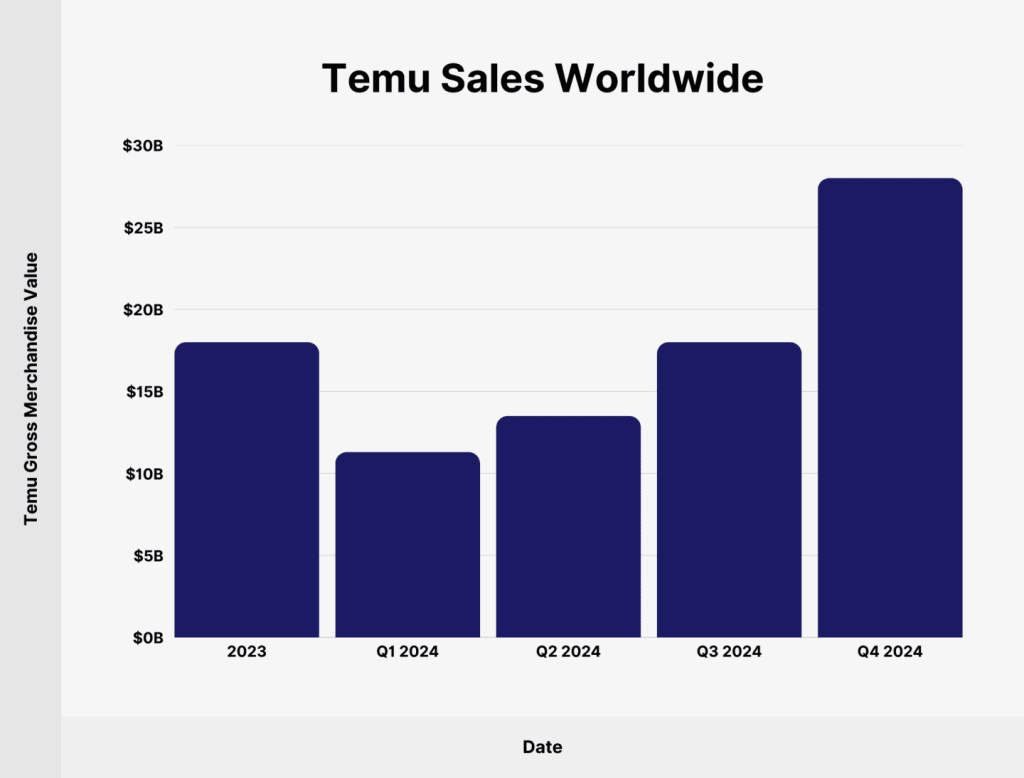
Source: Backlinko
While Temu’s annual revenue has yet to come close to Amazon’s $700 billion, its high adoption rate and relentless marketing efforts nonetheless make it a fierce competitor.
Temu’s Expansion Into Southeast Asia
Since its founding in 2022, Temu has wasted no time introducing its site to a wide variety of markets. In the past three years, Temu has been working its way into the United States, Canada, Australia, New Zealand, and Europe with much success. However, expansion into the Southeast Asian region has been a bit trickier.
The company has strong competition for e-commerce market share in Southeast Asia; Temu directly competes with more established e-commerce platforms in the area such as Shopee, Lazada, and TikTok Shop.
Temu’s strategy is relatively new in American and European markets, but its cross-border model has already been adopted by companies in the region. Its pricing is also not as competitive in Southeast Asia as it is in other markets; in fact, 3 out of 5 products in Temu cost more than on Shopee, Lazada, and TikTok Shop.
Temu attempted to enter the following countries:
- Indonesia: Indonesia, the region’s largest e-commerce market, banned Temu due to concerns about its impact to hurt small business owners. The country has historically been strict with e-commerce companies: TikTok Shop was also briefly banned from the country in October 2023. Like Vietnam, the Indonesian government is concerned about sellers on Temu undercutting local sellers and shippers.
- Vietnam: Southeast Asia’s fastest growing market, Vietnam, has threatened to ban the e-commerce site if it does not comply to the country’s Ministry of Industry and Trade’s request to register their activities with a certain timeframe Like other countries in the region, Vietnamese officials are concerned about possible negative impacts that Temu’s operations will have on local business owners. SHEIN, another low-priced marketplace, is likely to be on the chopping block, as well.
- The Philippines: The company now has its sights set on the Philippines. Temu is attempting a semi-hosted model in the country, which means that sellers on the app will manage their own product listings and prices, but Temu will take ultimate responsibility for shipping and other logistic fulfillment. This model was tested in Europe and indicates that this type of model reduces seller costs by up to 30% and boosts order fulfillment rates to 95%.
- Malaysia and Thailand: Temu was introduced into Malaysia and Thailand in 2023. While Thai regulators have yet to impose restrictions on Temu, Reuters reported that almost 2,000 factories have closed and over 50,000 workers have lost their jobs in Thailand due to the influx of cheaper Chinese goods into the market.
- South Korean regulators are also investigating Temu to ensure the validity of their advertising and product quality.
Temu’s Future Challenges
Temu faces compliance issues in its expansion into Southeast Asia, but there is no doubt that Temu has a solid and attractive offer for consumers, and if their performance in other global markets is any indicator, Southeast Asian shoppers will quickly adopt the platform.
However, https://cube.asia/wp-content/uploads/2025/02/TikTok-Shop-main-logo_11zon-1.webp Torring, co-founder of Cube Asia, notes that “Temu has become the lightning rod for every regulator, everywhere now getting worried about whether cross-border import rules should be changed.”
Temu will likely continue to work with regulators to ensure their platform is able to operate in the Southeast Asian market. But for now, a complete expansion into the region, just like the unbeatable prices on Temu’s site, might be too good to be true.